Background
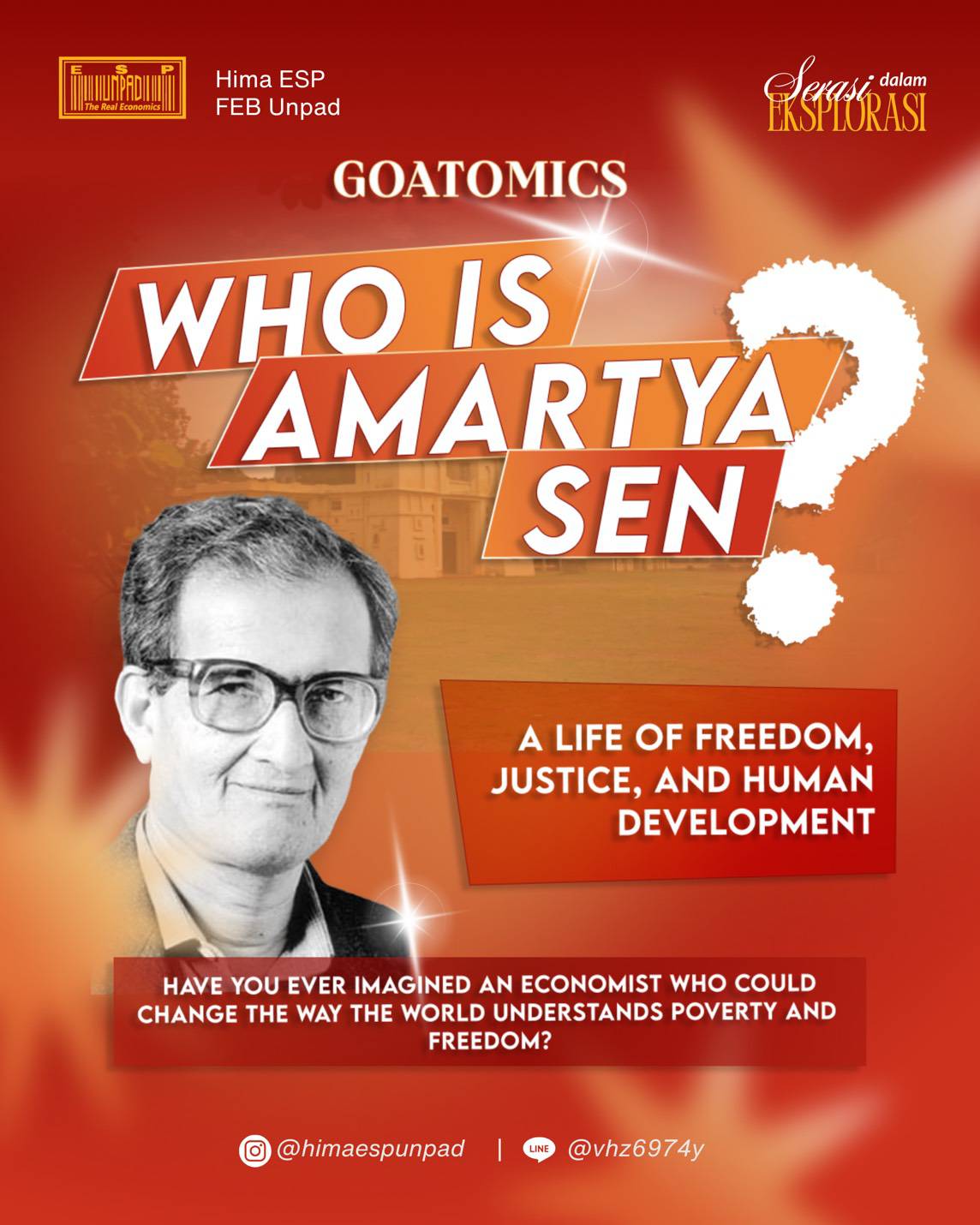
Amartya Kumar Sen was born on November 3, 1933, in Santiniketan, West Bengal, during the British colonial rule of India. Santiniketan itself was not an ordinary town. It was the home of Visva-Bharati University, founded by Rabindranath Tagore, the first non-European Nobel Laureate in Literature. Sen developed a unique combination of intellectual influences and political awareness during his early life. He received his education in an environment that didn’t focus solely on textbooks but also included art, music, culture, philosophy, and an openness to global ideas. As he reflected later, the experience gave him a worldview that harmonized Indian traditions with cosmopolitan ethics.
His father, Ashutosh Sen, was a professor of chemistry at Dhaka University, and his mother, Amita Sen, came from a distinguished intellectual family. Despite the academic stimulation he received from his family, the tragic Bengal Famine of 1943 left an indelible mark on his thinking. Although Sen’s family was not significantly affected, he witnessed death, destitution, and displacement around him. His future research was heavily influenced by his early exposure to suffering, which he cocluded was a result of social and economic breakdowns in entitlement and access, not a scarcity of food. This formative experience is directly linked to many of Sen’s later contributions in development economics, such as his entitlement theory of famine.
Motivated by these early encounters with poverty and inequality, Sen decided to formally study economics at Presidency College, Kolkata, graduating with first-class honors. He then went to Trinity College, Cambridge, where he earned another B.A. and later completed his Ph.D. under the supervision of economic thinkers such as Joan Robinson and political philosophers such as Peter Laslett. His education in both economics and philosophy allowed him to cross disciplinary boundaries, a trait that became central to his career. As Sen outlines in Development as Freedom (1999), his intellectual project seeks to integrate empirical economics with ethical and political reasoning, aimed at understanding how to create a more just society.
Career Path
Sen’s professional journey began at an unusually young age. During his doctoral studies, he was appointed the first Head of the Department of Economics at Jadavpur University in Kolkata at the age of 23. After finishing his Ph.D. in 1959, he taught at several renowned institutions, including the University of Delhi, the London School of Economics, and the University of Oxford, where he became the Drummond Professor of Political Economy. In India, his tenure at the Delhi School of Economics during the 1960s helped establish the institution as a global center of economic thought.
In 1987, he moved to Harvard University, where he was appointed the Thomas W. Lamont University Professor and Professor of Economics and Philosophy. This rare dual appointment reflected Sen’s interdisciplinary standing as a thinker who reshaped welfare economics through rigorous philosophical inquiry. His ability to connect normative questions with policy design became more relevant than ever. Throughout his career, he also held visiting or permanent appointments at leading institutions such as Stanford, Berkeley, MIT, and Cornell. These roles expanded his academic influence and allowed his interdisciplinary approach to reach a truly global audience. During this period, his ideas began to influence not only academic circles but also international development organizations and public institutions around the world.
A key intellectual milestone of his career was the development of the Capability Approach, a conceptual framework for evaluating individual well-being in terms of the real freedoms or opportunities people have to achieve the lives they value. This approach challenged conventional welfare economics, which tended to reduce human welfare to income or utility. Sen argued that the most important thing was not the goods people possessed, but their actual freedoms, which involved what they could do and be. This redefinition of well-being shifted the discourse toward individual agency and empowerment.
This approach was formalized and popularized in his seminal work Development as Freedom (1999), in which Sen outlined five types of interlinked freedoms: political freedoms, economic facilities, social opportunities, transparency guarantees, and protective security. This book has become a foundational reading in development studies and public policy. Sen’s ideas were crucial in the formulation of the Human Development Index (HDI) by the United Nations Development Programme, which reoriented global development metrics away from GDP and toward life expectancy, education, and living standards. The influence of this work can be seen in global development priorities today.
From 1998 to 2004, Sen served as the Master of Trinity College, Cambridge, becoming the first Asian to head a college in the history of the University of Cambridge. In that role, he championed inclusivity, academic freedom, and interdisciplinary research. Simultaneously, he remained active in global development debates, particularly through his involvement with the Human Development and Capability Association, which he co-founded with philosopher, Martha Nussbaum. Sen also remained deeply engaged with Indian public life. In collaboration with economist Jean Drèze, He collaborated with economist “Jean Dreze” to write several influential books, such as India: Development and Participation and An Uncertain Glory: India and Its Contradictions, which critiqued India’s development policies and advocated for greater state commitment to public health, primary education, and food security. These works influenced real-world policy debates, especially around the National Rural Employment Guarantee Act (NREGA) and the Right to Food campaign.
Nobel Prize Journey
In 1998, Amartya Sen was awarded the Sveriges Riksbank Prize in Economic Sciences in Memory of Alfred Nobel for his contributions to welfare economics. He was cited by the Nobel Committee for his pioneering work on social choice theory, poverty measurement, and famine analysis, and was acknowledged for reintroducing ethical dimensions into economics. Among his most influential early contributions was Collective Choice and Social Welfare (1970), which extended and critiqued Kenneth Arrow’s impossibility theorem by offering new insights into how societies could make fair collective decisions. Rather than seeking perfect aggregation of individual preferences, Sen explored how ethical judgments, rights, and equity constraints could be rationally incorporated into social welfare functions. His contribution provided new hope for reconciling fairness with democratic choice.
Amartya Sen’s 1981 work, Poverty and Famines, revolutionized the study of famines. Sen developed the Entitlement Approach, showing that famines occur not only due to food scarcity but because people lose the ability to command food through legal means like trade, labor, or inheritance. His analysis of the 1943 Bengal Famine, grounded in both empirical and theoretical insights, demonstrated that democratic accountability, access to information, and social protections are essential to preventing mass starvation. Sen’s Nobel Prize was not merely a recognition of academic brilliance. It was a celebration of an economic paradigm rooted in human dignity and social justice. It signified a shift in the discipline toward an economics that takes ethics seriously and a vision of development that values freedom over mere income.
Conclusion
Amartya Sen’s intellectual legacy lies in his unwavering commitment to human dignity, public reasoning, and social justice. He has transformed the landscape of economics and development by insisting that freedom, not merely income, is both the means and the end of a good life. His Capability Approach has shaped how policymakers, academics, and institutions around the world understand well-being, justice, and development. This framework is not only academically influential but also highly applicable in real-world policymaking, as it shifts attention from aggregate economic indicators to the lived experiences of individuals. His work continues to inspire new generations of scholars across disciplines.
His career has bridged continents, disciplines, and ideologies, but his central concern has remained constant: how to create a world in which individuals are genuinely free to pursue meaningful lives. As a teacher, scholar, author, and public intellectual, Sen has left an enduring mark on the way societies think about poverty, inequality, and human progress. More than just a Nobel Laureate, Amartya Sen stands as a philosopher-economist of the highest order, a voice of conscience in an era marked by division, deprivation, and the urgent need for ethical action.
Azka Azfalah Naufal e!24
Reference
Development as Freedom | Amartya Sen. (2025). Harvard.edu. https://sen.scholars.harvard.edu/publications/development-freedom
Drèze, J., & Amartya Sen. (2013). An Uncertain Glory India and its Contradictions. Princeton University Press.
DrèzeJ., & Amartya Kumar Sen. (2002). India : development and participation. Oxford University Press.
Sen, A. (2009). The idea of justice. Harvard University Press.
Terjesen, S. (2004). Amartya Sen’s Development as Freedom. ResearchGate; unknown. https://www.researchgate.net/publication/27466009_Amartya_Sen
The Sveriges Riksbank Prize in Economic Sciences in Memory of Alfred Nobel 1998. (1998). NobelPrize.org. https://www.nobelprize.org/prizes/economic-sciences/1998/sen/facts/
 KANDANK ILMU